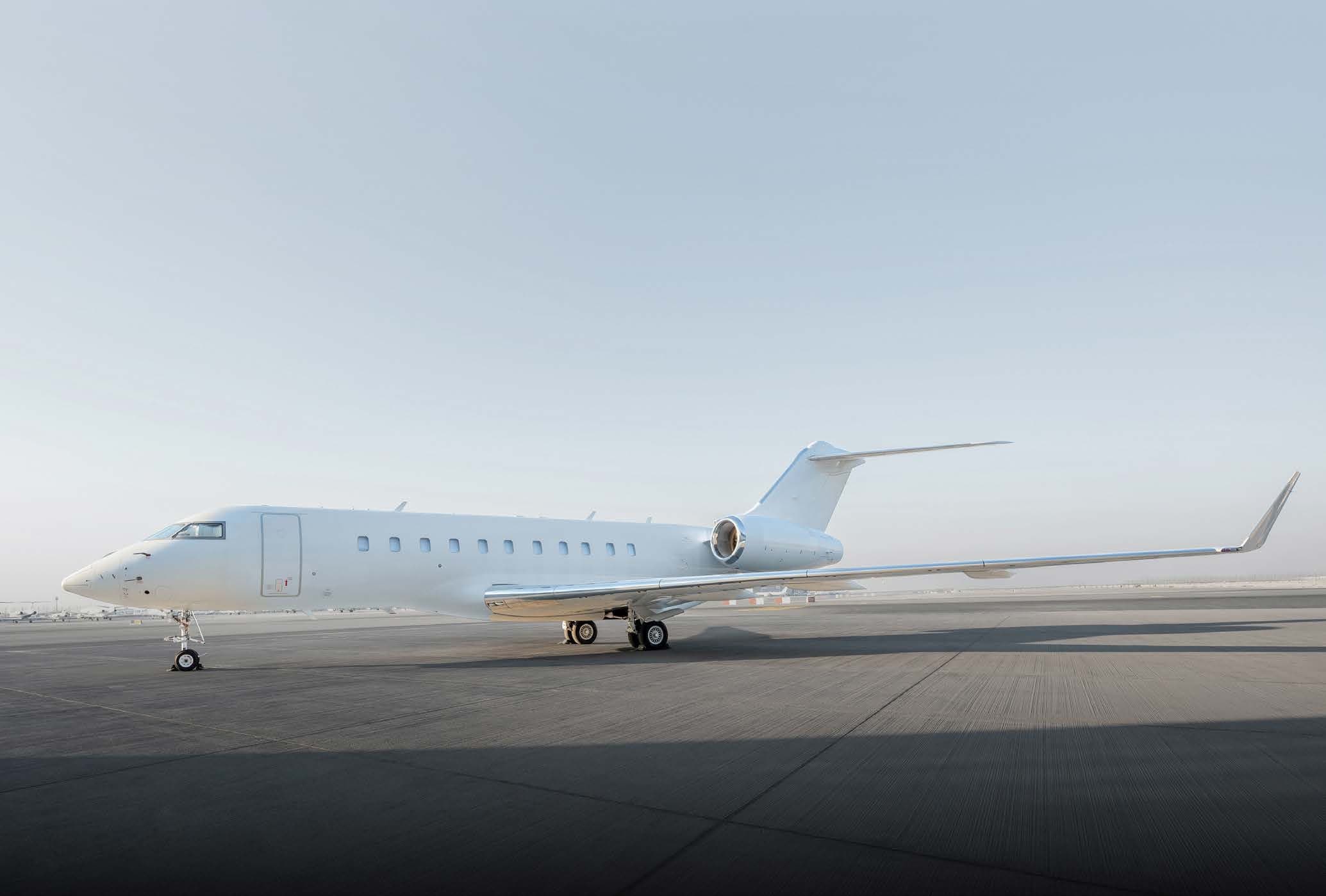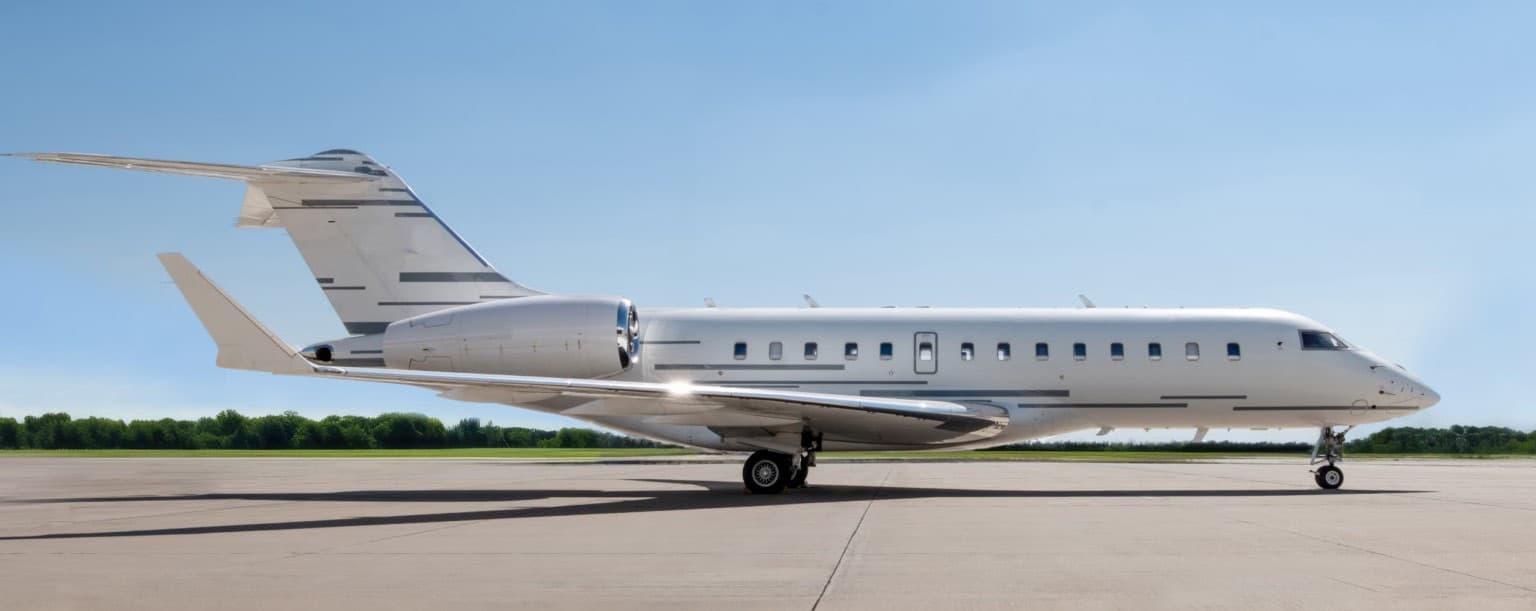
Gulfstream G550 vs Bombardier Global 5000
TL;DR:The Gulfstream G550 flies farther and burns less fuel; the Bombardier Global 5000 cruises faster and has a wider cabin. Both are Rolls-Royce BR700-powered heavy jets from the same competitive generation, but they favor different missions. The G550 wins decisively on range and fuel efficiency, making it the stronger choice for ultra-long-haul city pairs. The Global 5000 answers back with a slightly faster cruise, a wider cabin cross-section, and higher maximum passenger capacity. Neither aircraft is objectively "better" - the right choice depends on your typical stage length and cabin priorities.
At-a-Glance Spec Comparison
| Spec | Gulfstream G550 | Bombardier Global 5000 |
|---|---|---|
| Max Range (NBAA IFR) | 6,750 nm (8 pax) | 5,200 nm (Mach 0.85, post-2008 MTOW) |
| High-Speed Cruise | 488 kts (Mach 0.85) | 499 kts (Mach 0.89) |
| Long-Range Cruise | Mach 0.80 | Mach 0.85 (~488 kts) |
| Passengers (max / typical) | 19 / 14-16 | 17 / 8-13 |
| Cabin Length | 43 ft 11 in (13.39 m) | 40 ft 9 in (12.42 m) |
| Cabin Height | 6 ft 2 in (1.88 m) | 6 ft 2 in (1.88 m) |
| Cabin Width | 7 ft 4 in (2.24 m) | 7 ft 11 in (2.41 m) |
| Cabin Volume | 1,669 cu ft (47.26 m³) | approximately 1,881 cu ft |
| MTOW | 91,000 lb (41,277 kg) | 92,500 lb (42,000 kg, post-2008) |
| Engines | 2x Rolls-Royce BR710 C4-11 | 2x Rolls-Royce BR710A2-20 |
| Typical Fuel Burn (GPH) | approximately 370-420 | approximately 450-500 |
| First Delivery Year | 2003 | 2005 |
| FAA TCDS Type | A12EA (GV-SP) | T00003NY (BD-700-1A11) |
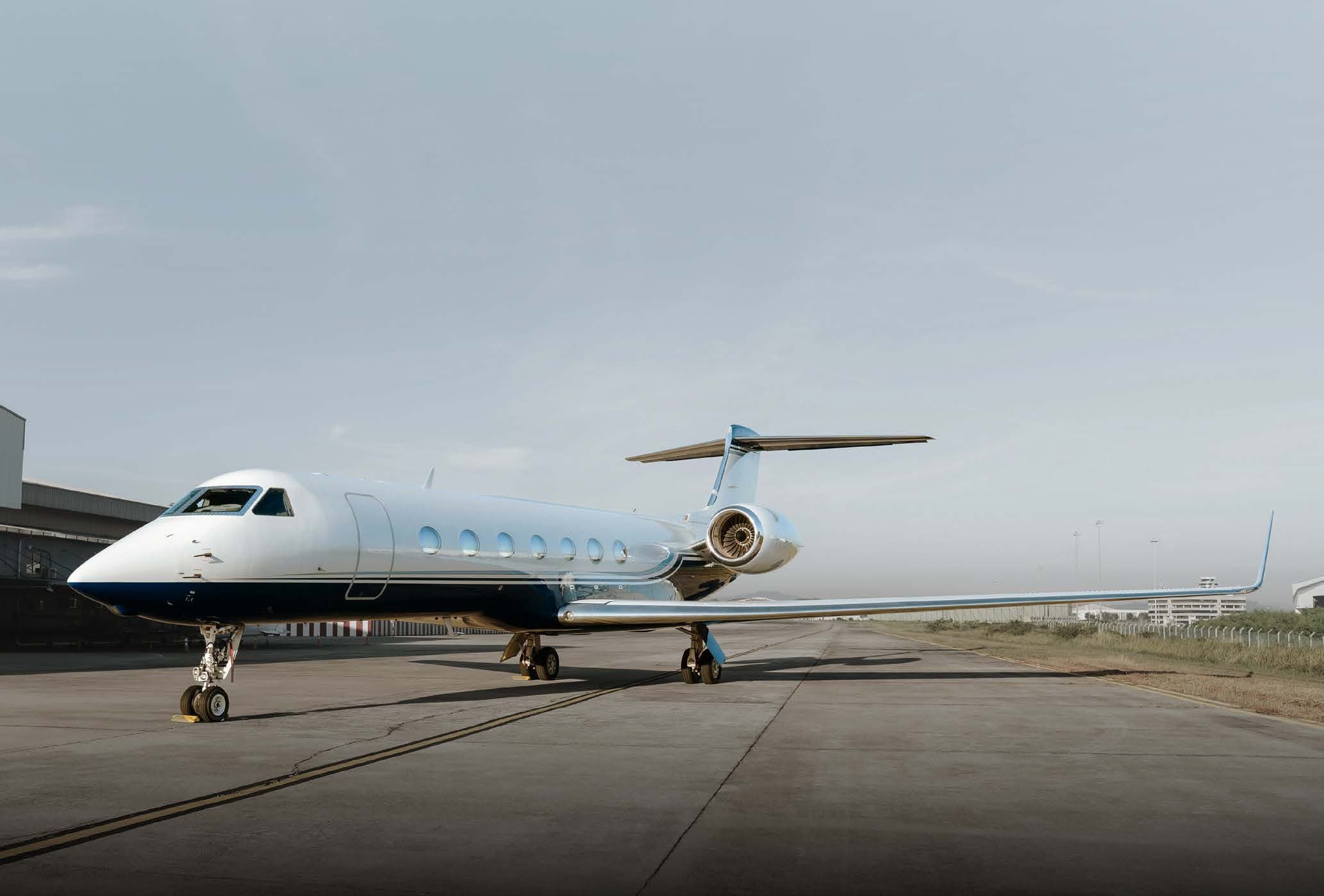
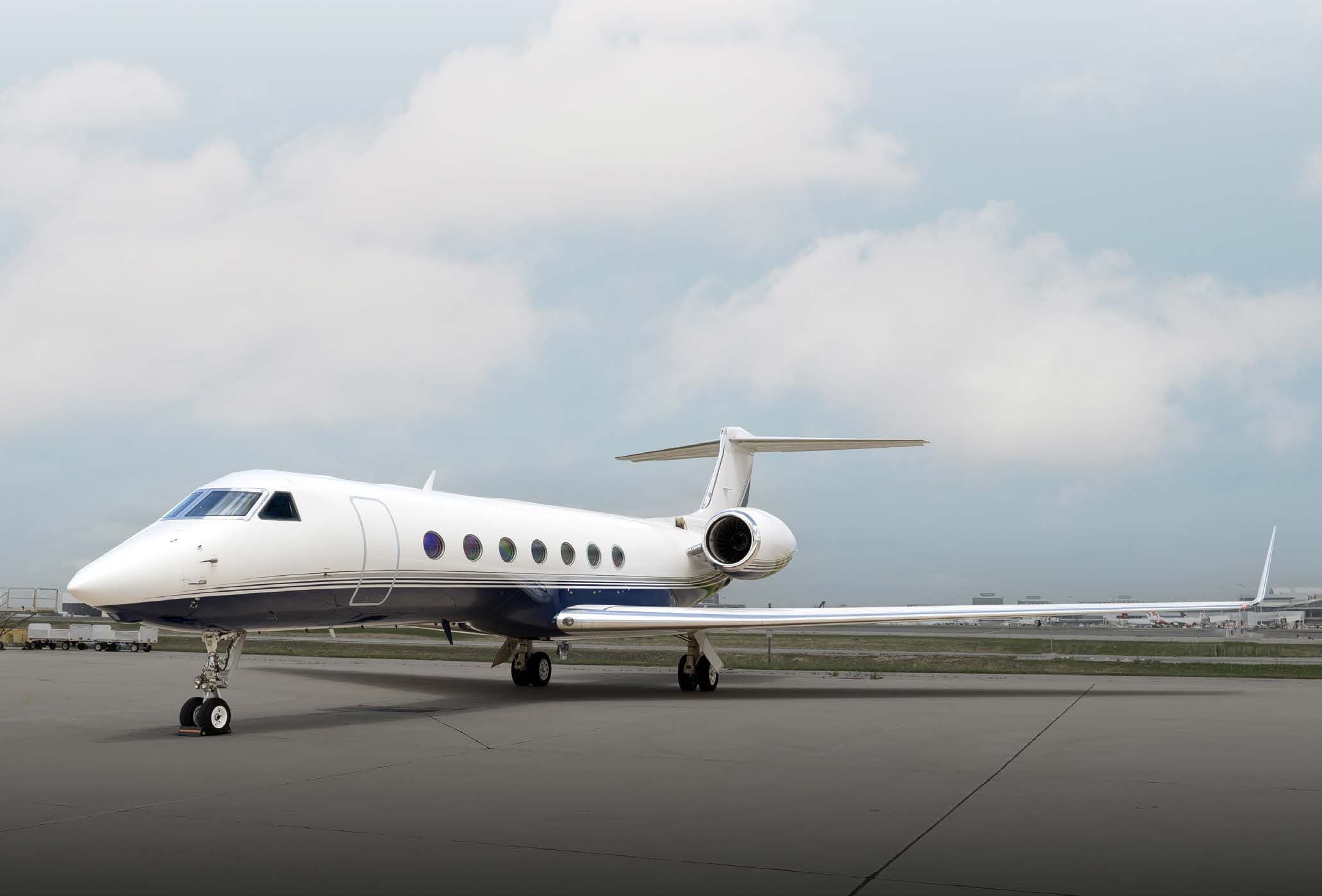
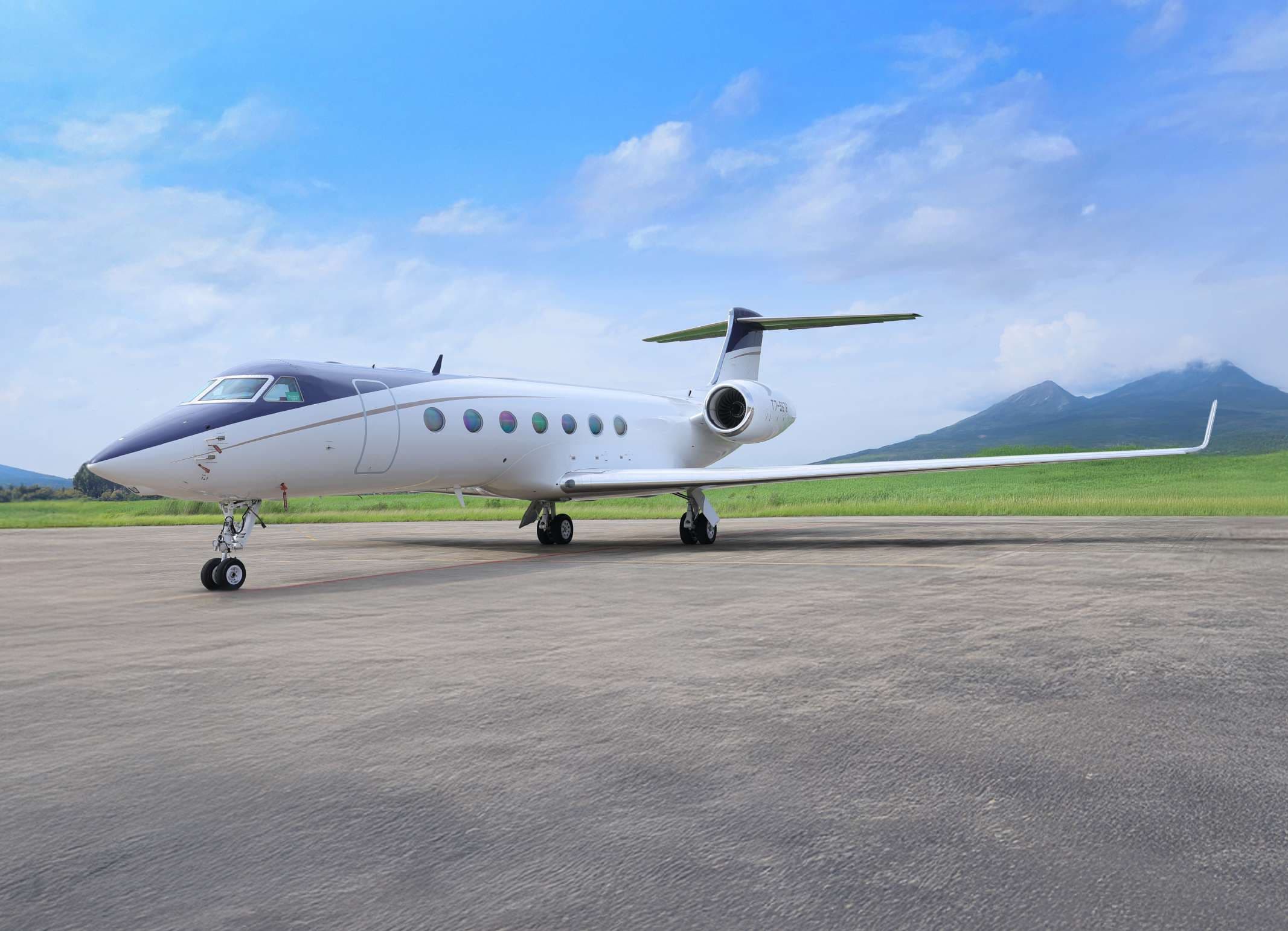
Gulfstream G550 Overview
The Gulfstream G550 is a large-cabin, ultra-long-range business jet built by Gulfstream Aerospace, a General Dynamics company. Certified under FAA Type Certificate A12EA (model designation GV-SP), the G550 entered service in September 2003 and remained in production for eighteen years before Gulfstream closed the line in July 2021, by which point approximately 622 units had been built.
The G550 sits at the top of what was, at the time, Gulfstream's large-cabin lineup, later succeeded by the mid-range G500/G600 family and the ultra-long-range G650/G700 twins. Even with newer siblings on the market, the G550 remains one of the most common heavy jets in service today, and its combination of range and cabin volume keeps it competitive on the pre-owned market.
The G550's standout differentiator, per Gulfstream's published specifications, is range paired with fuel efficiency. At 6,750 nm (NBAA IFR reserves, 8 passengers), it can fly missions few other heavy jets in its class can match without a fuel stop. That range comes from a combination of a larger fuel load (41,300 lb) and a comparatively low cruise fuel burn, which we cover in detail in the Range & Performance and Operating Cost sections below.
Inside, the G550 typically seats 14 to 16 passengers across three or four cabin zones, with a maximum certified capacity of 19. The cabin is long relative to its class at 43 ft 11 in, which is what enables the four-zone configuration many operators choose for long-haul comfort, including a dedicated crew rest or sleeping area on many aircraft. Standard equipment includes a head-up display (HUD) and Enhanced Vision System (EVS), features that were ahead of the market when the G550 launched and remain valuable for operators flying into challenging airports or weather.
For buyers comparing the G550 to the Global 5000, the core trade-off to keep in mind is this: the G550 is the range and efficiency specialist of the pair.
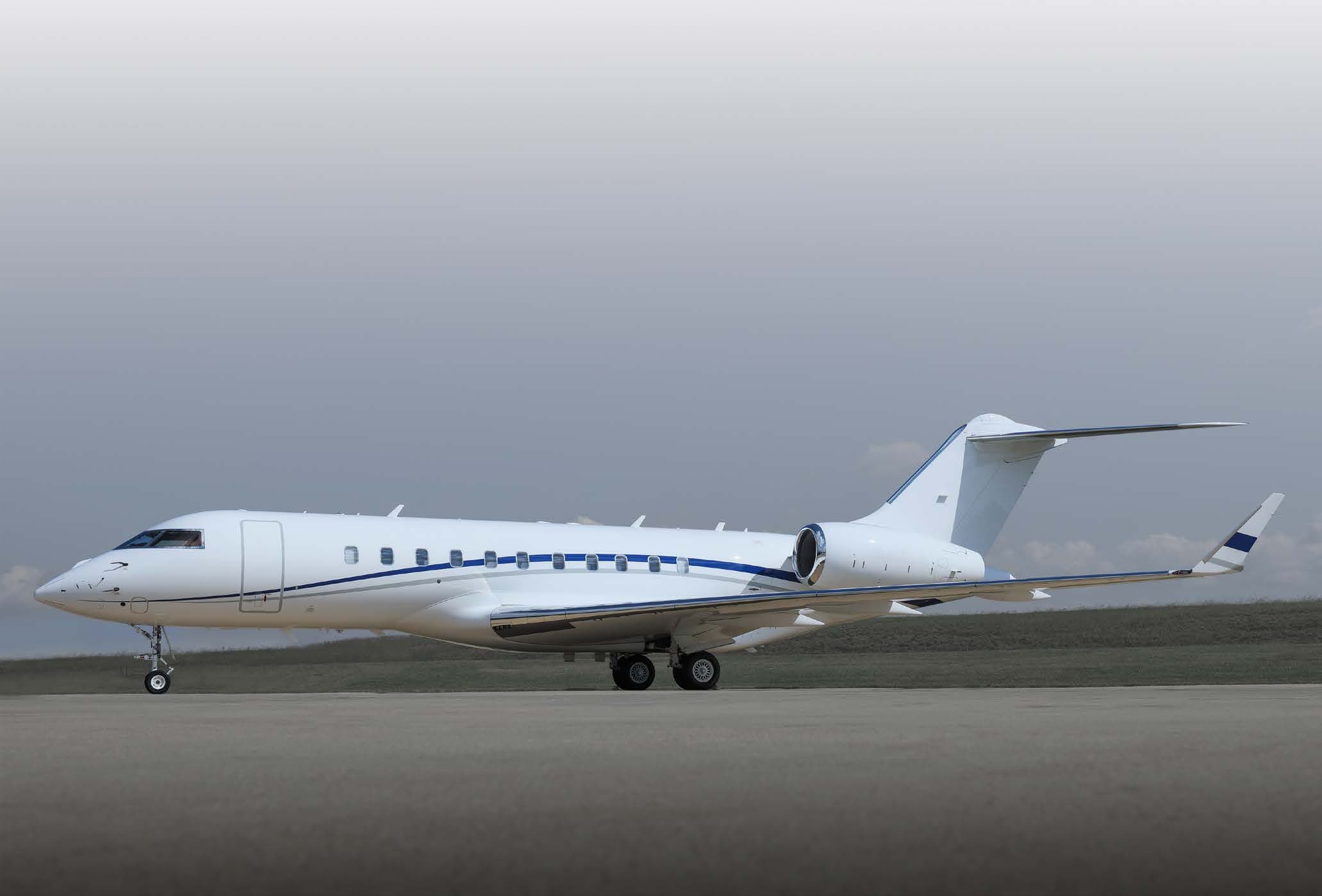
Bombardier Global 5000 Overview
The Bombardier Global 5000 is a large-cabin, long-range business jet from Bombardier Aerospace, certified under FAA Type Certificate T00003NY (model designation BD-700-1A11), which it shares with the broader Global Express family. The Global 5000 first flew in March 2003 and entered service in April 2005. Production continued until approximately 2019-2020, when Bombardier replaced it with the Global 5500.
The Global 5000 belongs to the Global family alongside the Global Express/XRS, Global 6000, and later the Global 5500 and 6500. Bombardier's Global Express platform amassed more than 816 units across its variants through 2018, giving the Global 5000 a substantial base of parts support, maintenance familiarity, and operator experience in the marketplace.
Per Bombardier's published specifications, the Global 5000's standout differentiators are cruise speed and cabin cross-section. Its maximum operating Mach of 0.89 edges out the G550, and its high-speed cruise of 499 kts is a meaningful, if modest, advantage on longer sectors. The Global 5000 also has the wider cabin of the pair at 7 ft 11 in, plus greater overall cabin volume at approximately 1,881 cu ft, giving it a more spacious feel shoulder-to-shoulder even though its cabin is shorter end-to-end than the G550's.
One important note for buyers evaluating a pre-owned Global 5000: the aircraft underwent a significant mid-production avionics upgrade, which we detail in the Avionics section below. Aircraft built before and after 2012 have materially different flight decks, and that distinction affects both capability and valuation.
In typical configuration, the Global 5000 seats 8 to 13 passengers across two or three cabin zones, with a maximum certified capacity of 17. For buyers who prioritize a wider cabin, faster cruise, or higher headcount over maximum range, the Global 5000 is the natural fit.
Range & Performance Compared
The Bombardier Global 5000 is faster than the Gulfstream G550 (499 kts vs. 488 kts high-speed cruise), while the G550 flies significantly farther (6,750 nm vs. 5,200 nm NBAA IFR range). That speed-versus-range trade-off defines the comparison. The G550's NBAA IFR range (the industry-standard fuel-reserve method used to make range figures comparable across manufacturers) of 6,750 nm (8 passengers) gives it a decisive 1,550 nm advantage over the Global 5000's 5,200 nm (at Mach 0.85, using the post-2008 92,500 lb MTOW certification). That gap is large enough to matter operationally: routes like New York to Tokyo (roughly 5,850 nm) or London to Singapore (roughly 5,950 nm) are within the G550's nonstop capability but require a fuel stop for the Global 5000.
Both aircraft comfortably handle the transatlantic routes most large-cabin buyers fly day to day. New York to London, at roughly 3,000 nm, sits well within either aircraft's range envelope with standard reserves, so the range gap is most relevant to operators who regularly fly ultra-long-haul intercontinental sectors rather than transatlantic city pairs.
Speed tells the opposite story. The Global 5000's maximum operating Mach of 0.89 is faster than the G550's own maximum operating Mach (MMO) of 0.885, and in practical terms its high-speed cruise of 499 kts beats the G550's 488 kts. The margin, about 11 knots, is modest but measurable on longer sectors: over a five-hour transcontinental or transatlantic leg, the Global 5000's speed advantage can trim meaningful minutes off block time.
It's worth noting that the G550's headline speed figure (Mach 0.885 MMO) is actually higher than the Global 5000's practical high-speed cruise Mach, but the G550's typical high-speed cruise setting of Mach 0.85 puts its real-world cruise speed a notch below the Global 5000's. In other words, the Global 5000 is engineered to cruise closer to its top speed day to day, while the G550 is set up to trade a bit of speed for the fuel efficiency that underwrites its range advantage.
The practical takeaway: if your typical mission profile includes ultra-long-haul sectors (Asia-Pacific, Middle East to the Americas, or similar), the G550's range advantage is the deciding factor. If your missions are mostly transatlantic or transcontinental and you value shaving time off every leg, the Global 5000's speed edge adds up over a flight department's annual hours.
Cabin & Interior Compared
Both aircraft share the same 6 ft 2 in cabin height, so neither has a meaningful edge on stand-up comfort. Where they diverge is cabin shape: the G550 is longer (43 ft 11 in vs. 40 ft 9 in), while the Global 5000 is wider (7 ft 11 in vs. 7 ft 4 in) and has greater overall cabin volume (approximately 1,881 cu ft vs. 1,669 cu ft).
That length-versus-width trade-off has real configuration consequences. The G550's extra cabin length typically supports four distinct living zones, commonly a forward seating area, a mid-cabin conference or dining group, an aft seating section, and a private aft area that can convert to a crew rest or sleeping berth for up to eight passengers. The Global 5000's shorter cabin usually yields two or three zones, prioritizing a more generous shoulder-width feel over the extra room for a fourth distinct section.
Baggage access matters on long-haul trips, and here the Global 5000 has a modest edge with 195 cu ft of baggage capacity versus the G550's 170 cu ft, both accessible in flight. Cabin altitude, which affects passenger fatigue over long sectors, favors the Global 5000 slightly at 5,680 ft (at FL510) versus the G550's 6,000 ft, a difference some passengers notice on longer flights even though it is a relatively small gap. Cabin noise is nearly identical, at approximately 52 dB for the Global 5000 and 53 dB for the G550.
Both aircraft include forward and aft lavatories and a full galley setup suited to multi-hour service. For buyers who entertain or hold working meetings onboard, the Global 5000's wider cross-section often reads as more comfortable for side-by-side seating and conference groupings. For buyers who prioritize distinct zones for privacy, work, and rest on long-haul missions, the G550's additional length and four-zone layout tends to win out.
Avionics & Cockpit Technology
The G550 shipped with a consistent avionics suite throughout its production run: the Gulfstream PlaneView flight deck, built around Honeywell's Primus Epic core avionics and four 14-inch LCD displays with cursor control devices. Every G550 also came standard with a Rockwell Collins head-up display (HUD) and an Elbit Systems Enhanced Vision System (EVS), features that were far from universal on competing large-cabin jets when the G550 launched. All G550s support standard RVSM operations, and ADS-B Out compliance is available via retrofit for aircraft built before the mandate.
The Global 5000's avionics history is more complex, and it's an important consideration for anyone shopping the pre-owned market. Aircraft built between 2005 and roughly 2012 carry the Honeywell Primus 2000XP EFIS suite, built around six 8x10 inch CRT displays, an older-generation cockpit by current standards. Aircraft built from 2012 onward received the Bombardier Vision flight deck, based on Rockwell Collins Pro Line Fusion, which adds synthetic vision, four large LCD displays, and touchscreen controllers, a substantial capability jump over the earlier suite.
For buyers, this split matters. Two Global 5000s from different production years can have meaningfully different cockpits, different training requirements, and different resale positioning, even though the airframe and performance specs are otherwise the same. The Vision-equipped, post-2012 aircraft are generally considered the more capable and more desirable of the two generations. Both cockpit generations support standard RVSM operations, and the Global 5000 additionally carries steep-approach certification for airports like London City and Aspen.
When evaluating a used Global 5000, confirm which avionics generation the aircraft carries before comparing it directly to a G550, since the two Global 5000 cockpit eras are functionally different aircraft from a technology standpoint.
Operating Cost Context
Fuel burn is the clearest operating-cost differentiator between these two aircraft, and it's also where the G550's range advantage originates. Industry sources place the G550's typical cruise fuel burn at approximately 370-420 GPH, while the Global 5000 runs higher, at approximately 450-500 GPH. That gap of roughly 80-100 GPH compounds significantly over a full year of flying, and it's the primary reason the G550 can fly nearly 1,600 nm farther despite carrying slightly less total fuel capacity (41,300 lb vs. 39,250 lb).
Both aircraft use Rolls-Royce BR700-series turbofans (the G550's BR710 C4-11 and the Global 5000's BR710A2-20), and both engine families are eligible for Rolls-Royce's CorporateCare maintenance program, an hourly-cost engine maintenance plan widely used across large-cabin business aviation. Enrolling in a program like CorporateCare is standard practice for owners of either aircraft and is worth factoring into any total cost of ownership analysis alongside fuel burn.
Broadly speaking, both the G550 and Global 5000 sit in the same large-cabin, heavy-jet operating cost tier. Airframe maintenance, insurance, and crew costs are broadly comparable between the two, since they compete directly for the same buyer and operate from similar-sized flight departments. Fuel burn is the primary differentiator in the cost picture, and operators running longer average stage lengths will feel the G550's efficiency advantage most directly. We'd encourage buyers to work through a detailed cost comparison with their management company or a maintenance-tracking provider using their specific mission profile, since actual costs vary by utilization, routing, and maintenance program selection.
Which One Should You Choose?
There is no universal winner: choose the G550 for maximum range and fuel efficiency, choose the Global 5000 for cruise speed and cabin width. The honest answer is that neither aircraft is the better choice in the abstract. Each is optimized for a slightly different mission, and the right pick depends on how you actually fly.
The Gulfstream G550 suits buyers whose missions regularly stretch into ultra-long-haul territory: intercontinental sectors to Asia, the Middle East, or across the Pacific, where a single nonstop leg saves hours of fuel-stop logistics, crew duty-time complications, and passenger fatigue. If your flight department's mission profile includes multiple ultra-long-haul city pairs per year, or if fuel efficiency and lower operating cost per mile are a priority, the G550's range and burn advantage will likely outweigh the Global 5000's speed and cabin-width edge. The G550 also appeals to buyers who value a four-zone cabin layout for privacy or dedicated rest space on long sectors.
The Bombardier Global 5000 suits buyers whose missions are predominantly transatlantic, transcontinental, or regional, where the extra speed shaves real time off every trip and the wider cabin matters more than outright range. It also fits buyers who want to move slightly more passengers on a typical flight (up to 13 in a comfortable layout) or who prioritize a broader, more open-feeling cabin for meetings and entertaining. If you're shopping the pre-owned market and want the option of the newer Vision flight deck, focus your Global 5000 search on post-2012 production aircraft.
In practice, many buyers narrow the field to these two aircraft precisely because they are close competitors, and the final decision often comes down to a hands-on cabin walkthrough and a side-by-side review of your actual annual mission mix rather than the spec sheet alone.
Gulfstream G550 For Sale
Browse current Gulfstream G550 listings available through PJ Club below, or reach out to our team for guidance on finding the right pre-owned G550 for your mission.
Bombardier Global 5000 For Sale
Browse current Bombardier Global 5000 listings available through PJ Club below, or contact our team to discuss avionics generation, cabin configuration, and other buying considerations.
Frequently Asked Questions
Is the Gulfstream G550 faster than the Bombardier Global 5000?
No. The Global 5000 has a slightly higher maximum operating Mach of 0.89 versus the G550's 0.885, and a practical high-speed cruise edge of 499 kts versus 488 kts. The difference is modest, about 11 knots, but it is measurable on longer sectors where the Global 5000 can shave real time off block hours.
Does the Global 5000 have more range than the G550?
No, the opposite is true. The G550 has a decisive range advantage, 6,750 nm versus the Global 5000's 5,200 nm (NBAA IFR reserves). That 1,550 nm gap lets the G550 fly ultra-long-haul routes, like New York to Tokyo, that the Global 5000 cannot cover nonstop.
Which has a bigger cabin, the G550 or Global 5000?
It depends on the dimension. The Global 5000 is wider (7 ft 11 in vs. 7 ft 4 in) with greater overall volume (approximately 1,881 cu ft vs. 1,669 cu ft). The G550 is longer (43 ft 11 in vs. 40 ft 9 in), supporting its four-zone layout. Cabin height is identical at 6 ft 2 in.
How many passengers can each aircraft carry?
The G550 is certified for up to 19 passengers, with 14 to 16 typical in a comfortable long-haul layout. The Global 5000 is certified for up to 17 passengers, with 8 to 13 typical. Actual seating depends on the specific interior configuration chosen by the original buyer.
What engines power the G550 and Global 5000?
Both use Rolls-Royce BR700-series turbofans. The G550 is powered by two BR710 C4-11 engines producing 15,385 lbf of thrust each, while the Global 5000 uses two BR710A2-20 engines producing 14,750 lbf each. Both engine families qualify for Rolls-Royce's CorporateCare maintenance program.
Is the G550 or Global 5000 better for transatlantic flights?
Both aircraft comfortably handle transatlantic routes like New York to London (roughly 3,000 nm) with standard reserves, so range is rarely the deciding factor there. On transatlantic legs, the Global 5000's modest speed advantage can shave a few minutes off block time, while the G550 offers a lower fuel burn per trip.
How does the G550 compare to the Global 6000?
The Global 6000 is a stablemate of the Global 5000 within Bombardier's Global family, generally offering a longer cabin and greater range than the Global 5000, positioning it closer to the G550's range class. Buyers comparing the G550 to Bombardier's lineup broadly should also evaluate the Global 6000 as a range-focused alternative to the Global 5000.
How does the Global 5000 compare to the newer Global 5500?
The Global 5500 succeeded the Global 5000 in Bombardier's lineup, entering service in 2020 with an updated engine and avionics package building on the Global 5000's airframe. Buyers considering a Global 5000 should be aware a newer-generation successor exists on the market with updated systems, which can affect Global 5000 resale positioning.
What is the typical fuel burn for each aircraft?
The G550 typically burns approximately 370-420 gallons per hour at cruise, while the Global 5000 typically burns approximately 450-500 gallons per hour. This roughly 100 GPH difference is the primary driver behind the G550's longer range and lower per-trip fuel cost on comparable missions.
Which aircraft has better resale value, or is more common on the pre-owned market?
Both aircraft are well represented on the pre-owned market. Approximately 622 G550s were built through 2021, while the Global 5000 is part of Bombardier's broader Global Express family, which surpassed 816 units by 2018. Resale positioning depends heavily on avionics generation, total time, and maintenance program enrollment rather than model alone.